
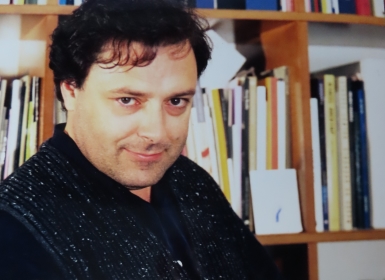
Biography
Xosé Miranda taught biology and geology at secondary school in Lugo. He has won three major Galician fiction awards: the García Barros for Story of a Blue Umbrella (1991), the Xerais for perhaps his best-known work, Morning Star (1998), and the Merlín for the children’s book Wolfskin (2002). He is also an accomplished poet, where he has similarly won three major prizes: the Eusebio Lorenzo Baleirón for Lovers and Travellers (1996), the Esquío for Permission for the Corsican (1997), and the Afundación for The Abolished Towers (2026). He is a connoisseur of Galician myths, legends, and folktales, and has edited or co-edited various volumes, including a Dictionary of Mythical Galician Beings (1998), When the Animals Used to Speak (2002), and Anthology of the Galician Folktale (2002). He has ventured into the fantasy genre with Parthenogenesis (1995).
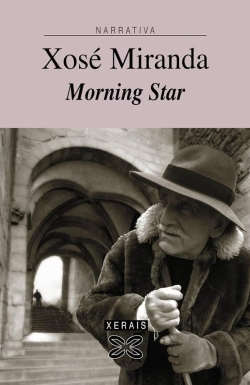
Synopsis
Morning Star (272 pages) is a modern classic of Galician literature and was awarded the prestigious Xerais Prize for Novels in 1998. It is an adventure novel in the mould of Treasure Island by Robert Louis Stevenson and Moonfleet by John Meade Falkner, both of which are quoted at the beginning of the book. Morning Star refers to a merchant ship that sailed between England and Ceylon and was captured by pirates in 1828, but later rescued. The novel is divided into eights parts and an appendix. In Part I, we are introduced to a tavern on the outskirts of Pontevedra, “The Dispute”, and the family that lives there.
Sample
“The Dispute” was the name of my father’s tavern, located in the vicinity of the city of Pontevedra, on the old road that leads there from Santiago de Compostela. From the tavern, you couldn’t even glimpse the last rural houses, already close to the Burg, scattered along the thoroughfare, and in reality you could only spot one or two small villages near the city, but you knew it was there from the frequent passing of carriages, stagecoaches with passengers, and carts with merchandise, as well as the royal post on horseback and various travellers who used to stop at our house for a drink or a rest. Pontevedra was less than half an hour away on a walking horse, and on days when the wind blew from the south, you could hear, without much effort, the bells of the Pilgrim and of St Mary’s summoning people to Mass or tolling the death knell from the other side of the Lérez.
The Dispute, an old, ramshackle house made of large slabs of granite, with a rectangular floor plan and most of its rooms empty and ruined, stood atop a small hill from where you could survey the thick forests that spread inland, the abrupt peaks of Castrove and Acival, a few pieces of the road on the plains and, if you strained your eyes, the white breakers bashing against the distant coast on the clearest days in the year. The air from the estuary penetrated as far as us, rusted hinges, hitching rings, and handles, dampened sheets and dresses, spoiled chorizos and hams, and ate away at doors and windows, forcing us to paint them every year and to plaster and whitewash the walls on a regular basis. On bitter winter evenings when there were hardly any customers, my father would curse the Jew who sold it to him and the unlucky hour when he had decided to take up this trade. He would then sit at one of the tables, with a bottle of brandy and a bowl, and my tears and my mother’s despair would do little to dissuade him. One swig after another, he would down the contents, getting more and more bad-tempered, until the bottle – and the day – finished and he slunk off in defeat to collapse into bed.


