
Synopsis
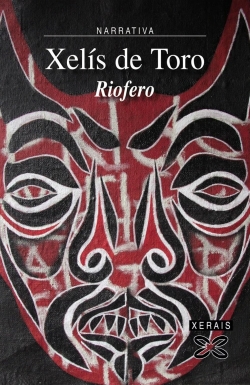
Feral River (248 pages) is Xelís de Toro’s fifth work of fiction and was first published in 2008. It follows a writer, Marqués’s journey upriver to investigate the causes of a boatman’s death in Romero, a town on the frontier. The book is divided into sixteen chapters and an epilogue of four chapters.
Marqués is a writer from the east coast. He has gone to the frontier in search of work, and also to escape an obsessive father after the death of his mother. So far, he has been unsuccessful. He arrives in Romero and visits the office of the local newspaper, where he offers his services, but is swiftly turned down. As he rests next to the estuary, there is an uproar, and Marqués opens his eyes to discover a boat coming downstream with a smoking mast and a man with a charred body who has been crucified on the mast. He begins to take photographs. The owner of the newspaper asks him if he is still looking for work. The newspaper owner turns out also to be the owner of the boat. He hires the writer to go upriver to learn the causes of the boatman’s death. He gives him a deckhand, a mestizo boy called Cordel whose mother was an Aventurei Indian. Marqués is unsure – he’s only a boy – but Cordel soon shows that he speaks the language of the river and is capable of manoeuvring the boat. The newspaper owner also hands him a revolver.
After their first night on the river, they reach the mission and Marqués meets the friar in charge, Father Bento, who explains how Cordel’s mother was raped by settlers, died in childbirth and was accorded the honour of being buried in the river. Marqués doesn’t feel well, he has red marks under his ear. Father Bento takes him to see the healing woman in the Indian village, who treats him by placing him in a pit and making him drink a dark liquid. He then loses consciousness and sleeps for two days. He wakes up on the mission, where Father Bento feeds him and explains how the river has good and bad currents; when the healing woman cured him, she was in fact curing the river. Not everybody is cured – the boatman’s brother also had a fever and went mad, disappearing into the jungle. Some say he became a slave, others a king. Father Bento then informs him that he has visitors.
Marqués is met on the boat by Rufus the Strongman and Ela. Rufus describes himself as “a giant, a boxer, a magician and a juggler”. Ela has brought along a piano. They have a letter from the boat owner, saying that they have paid for passage upriver. They all agree that it is time to be leaving the mission – there is something about the friar, a coldness, a silence, that unsettles them. As they continue upriver, Marqués lies in the boatman’s bunk, trying to fathom his secrets. Cordel catches a fish, which Rufus cooks for them. He explains how he used to work in the kitchen of a quayside café. There was a circus. The strongman from the circus caused a ruckus in the café and, when he killed Rufus’s dog with a single punch, Rufus came out of the kitchen, knocked him over and discovered he had a new vocation, where he was master of his destiny. Marqués likens his own profession to that of a robber. It is his job ‘to steal expressions, words, anecdotes, thoughts, feelings, and then creep back into his hidey-hole like a common thief to write, to lock it all away in words’.
Their next stop is the boatman’s house. They all sense a curse there. There is a disembowelled, headless pig in a hut. Then a shadowy figure leaps from the house and disappears into the jungle. They follow it. Along the way, Marqués notices a mirror lying on the ground and picks it up. He is just studying it when he receives a blow to the back of the head. When he comes to, the mirror has gone. They return to the relative safety of the boat, and Marqués fetches the revolver. Marqués and Cordel then enter the house, where Marqués discovers a photograph of the boatman and his Indian woman, whom he finds very beautiful. Back on the boat, they have trouble starting the engine. They turn to see that the house has been set on fire, all that remains of the boatman’s life being reduced to ashes. Marqués suspects that the figure may have been the boatman’s brother. After the fever and now the blow, Marqués feels the river is resisting him, denying him the story he wants to write. Cordel relates how one time, going upriver, the boatman and he had transported an animal-tamer with a gorilla. The two of them used to fight. One night, there was terrible yelling coming from the deck. The boatman took his revolver and went to see what was going on. The tamer was dead. The boatman shot the gorilla, which escaped into the jungle. Cordel now thinks the figure from the house might have been the gorilla, which had survived.
Marqués feels that he is getting nowhere with his narrative and notices that Ela also writes in a notebook, seemingly with more success than him. A swarm of mosquitoes attacks the boat, and they have to take shelter. They pass a group of Indians in erotic embraces in the river and on the bank. Marqués wants to take a photograph, but Cordel refuses to let him. When the others swim in the river later on, it is a swimless swim, as if they do not belong there. Cordel catches some eels, but the four travellers eat separately, as if they have nothing to do with each other. They continue upriver. One afternoon, they stop to swim. Marqués is hidden in the undergrowth and spies on Ela bathing with naked breasts. He desires her, but is caught by Rufus, who asks what he’s doing. They return to the boat, where Cordel makes a paste that he spreads on his gums and Rufus joins him, while Marqués vents his frustration by firing the revolver at the jungle. Later that night, he hears what he perceives to be moaning and wonders whether Ela and Rufus are making love, except that the sound is barely human.
The next day, Marqués wakes to discover a dead bird hanging from the rigging. There is a lot of mist. Marqués goes into the jungle to kill some fowl, which Ela then cooks. Rufus wants to practise fighting with his good hand tied behind his back. Marqués accepts the challenge and turns out to be a better fighter than anyone had expected. Cordel tells the story of the boatman’s woman. She was an Indian, but from another tribe. She was brought upriver to work as a whore – a ‘woman of the river’ is how they are referred to. Travelling during a storm, the boatman and the woman reached an understanding. In the settlement, she was frequented by many men, but when the boatman visited her room, he would go not as a customer, but as a lover. In the end, the boatman paid a large sum of money for the woman to be released and gave her the option of staying with him or leaving. She chose to stay with him.
They approach a part of the river where it isn’t possible to use the engine, and they must punt along, almost engulfed by the vegetation. Near a small cascade, they come across a group of head-hunters, not Aventurei, with blow-pipes at the ready, seemingly waiting for a sign, an order. They are all convinced that they are going to die. Just when it seems the inevitable is going to happen, Ela takes to playing the piano, reproducing the river’s sounds, and in a short while the head-hunters disappear, leaving them to continue their journey. Cordel is unnerved by the experience. They wonder if the boatman’s blood wasn’t enough and the river needs more. After more than ten days, they reach the settlement upriver, really just a street with buildings on either side and paths leading into the jungle. Rufus and Ela leave the boat with their belongings in order to take up residence there and put on performances. The stevedores and warehouseman are surprised to learn of the boatman’s death. They seem not to know anything about it. Marqués finds a pleasant guesthouse run by a matronly black woman called Xana. He is happy to spend a night on land, away from the river.
After a night’s sleep, Marqués goes to investigate the settlement. He is taken by a corpulent man to see some Indians in two huts – men who can work as trackers and porters, women who can give pleasure or help set up camp. He follows a pink pig, which leads him to an awning where Cordel is sitting with some other Indians, eating and drinking. Cordel takes him to the saloon where Ela is going to perform, which is the house where the boatman’s woman used to ply her trade. Marqués gets drunk on grappa. A couple of girls try to seduce him, but he realizes that it is not going to be like the boatman and his woman, who were in love. Ela performs, there is a ruckus. Marqués finds his table has been taken and goes outside to take a piss. He is overwhelmed by the presence of the jungle. Marqués returns to the saloon and visits Ela in the changing room. He hears footsteps upstairs and feels trapped, as in the belly of the boat, which he senses is never going to let him go. He then follows one of the girls who tried to seduce him earlier upstairs. He asks if they can go to the room used by the boatman’s woman. He believes that the girl who has taken him upstairs is the same woman. As they are getting intimate, three men burst into the room – the man with the Indians, a bouncer from downstairs and a third man – and everything goes dark. This is the end of the body of the book. There is then an epilogue.
In the epilogue, it is the next morning, and a woman accompanies Cordel to a clearing where Marqués is lying, almost dead. Unlike in the body of the book, the narrative here is in the voice of the woman, whom we understand to be Ela. Cordel fetches some men to help, and they take Marqués to the guesthouse where he is staying. The woman lies next to him on the bed, determined not to let death take him, as it has taken her son. Meanwhile, Cordel borrows Marqués’s camera and goes to take a photograph of the place where they found him. He is sure that this is what Marqués would have wanted, since he has been taking photographs all through the journey. Ela and Xana sit in the kitchen, and Ela explains how she lost her child due to a rash when she was away performing. She hadn’t wanted to get married in the first place, but had done so to placate her father. She continues to look after Marqués, who is slowly getting better, and has refused to go back to the saloon to play the piano. Rufus waits outside, his gaze fixed on the window, and only abandons his vigil when it is time for him to perform in the saloon.
Ela and Cordel prepare to take the boat back downriver. They are accompanied by two men whom Ela doesn’t like the look of. One of them tries to rape her on the journey, and they are forced to tie them up. Marqués has disappeared, pursuing his ghosts in the jungle, becoming a legend of the river, like the boatman and his woman, the boatman’s brother, the gorilla. But he has left behind his notebooks, and on the journey downriver Ela uses them to reconstruct the narrative of the writer who has gone in search of the causes of the boatman’s death, the narrative that we have read in the body of the book. Back in Romero, Ela leaves Marqués’s belongings with the boat owner and spends three weeks writing up the narrative. The boat owner offers to buy the manuscript, which they agree will be called Feral River: Lovers and Fugitives. He then informs Ela in passing that the local tailor, who had made the boatman’s wedding suit and who was also responsible for dressing the dead, despite being a drunk, has insisted that the man crucified on the mast of the boat and the boatman were not the same person because their measurements were different.
This is a powerful narrative about a writer’s journey upriver to determine the causes of someone’s death, with obvious parallels to Joseph Conrad’s novella Heart of Darkness, where there is a trading station upriver and characters who have gone native. The quest to understand the reasons for someone’s disappearance leads to the seeker’s own disappearance, as they pursue their own ghosts and the combination of the river and the jungle becomes too much for them. The narrative structure is interesting, with Ela writing the text based on Marqués’s notebooks, and whenever Marqués – and, later, Cordel – takes a photograph, this photograph is described in a paragraph in italics, so we can picture the scene. It is a text also about language – we have the narrative prepared by Marqués and reconstructed by Ela, but also the language of photography, the language of the Indians and river dwellers, and the language of the surroundings, which the characters are not always comfortable with. It is a text that keeps the reader’s attention.
Synopsis © Jonathan Dunne

 Portico of Galician Literature